When to Consider Speech and Language Therapy

Whether your child has difficulty talking, understanding, or swallowing, our skilled speech-language therapists offer compassionate support and coaching to help your child improve. We create a plan to help them succeed and support them as long as they need us. We work with children and families and focus on all areas of your child’s development — physical, emotional, social, and academic. We know your child can succeed, and we make sure they know they can, too. 

Conditions We Treat

We care for children of all ages, from infants to adolescents. As a pediatric academic medical center, we have the expertise to treat even the most complex speech, language, and swallowing disorders. 

Speech therapy can benefit children with various conditions:

  • Apraxia of speech
  • Autism spectrum disorders
  • Developmental delays
  • Difficulties understanding speech (auditory processing disorders)
  • Feeding and swallowing problems
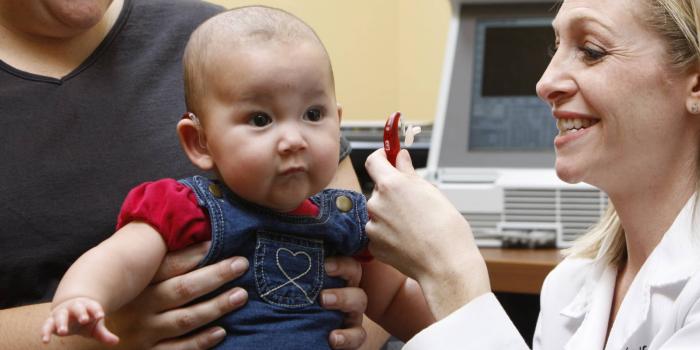
  • Hearing problems
  • Language disorders, such as delayed speech
  • Learning disabilities
  • Mouth muscle control problems (oral motor deficits)
  • Neurological disorders
  • Speech disorders and delays
  • Stuttering and lisps
  • Traumatic injuries
  • Voice and resonance disorders

Pediatric Speech and Language Therapy Services

Our therapists use the latest, child-friendly approaches to empower and help your child succeed. We offer a full range of speech and language therapy services:

  • Advanced diagnostic testing and treatment for swallowing disorders, including video fluoroscopic swallowing exams.
  • Evaluation and treatment of listening, speech, language, cognitive, social, and emotional skills.
  • Developmental assessments and personalized treatments.
  • Individual speech-language therapy sessions with children and their families.
  • Teaching parents functional communication training (FCT) techniques to help nonverbal children express themselves without using unwanted behaviors.
  • Information and referral to community-based resources.
  • Consultations with school therapists and educators to support academic growth and well-being.
  • Assistance with alternative and augmentative communication (nonverbal communication methods) — from sign language and picture boards to mobile apps and speech-generating devices.
  • Specialized speech therapy for children with cleft lip and palate.