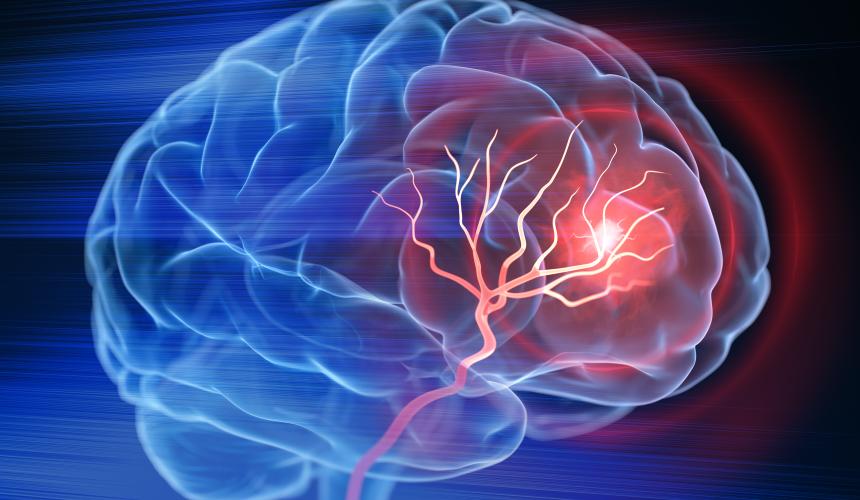
Stroke Care
Trust our experts to provide you with the latest treatments using the most advanced technology available.
Scam Alert: Tower Health is aware of fraudulent emails and texts offering a free "MyChart Medicare/Medicaid Kit." These messages are not from Tower Health or MyChart. Do not click links or provide personal information if you receive one of these messages.
A stroke is a medical emergency. Use BE FAST to recognize the warning signs of a stroke:
Balance - Loss of balance
Eyes - Vision impairment
Face - Drooping face
Arms - Loss of strength in arms
Speech - Difficulty speaking
Time - Call 9-1-1 immediately!
El accidente cerebrovascular es una emergencia del cerebro.
RÁPIDO
Rostro caído.
Alteración del equilibrio.
Pérdida de fuerze en el brazo o una pierna.
Impedimento visual repentino.
Dificultad para hablar.
Obten auda. Llama al 911.
If you think you or a loved one is having a stroke, call 911 immediately. With stroke, every minute counts.
You can trust Tower Health hospitals for emergency stroke care. Our three certified stroke centers serve Southeastern Pennsylvania with rapid response treatment to limit the effects of a stroke. Our advanced technology allows us to precisely diagnose the location and type of stroke, and provide clot-busting medications or mechanical interventions to safely and quickly remove the clot from the brain.
Timing is very important. To find out if you had a stroke and what treatment is best, you may have several tests.
Rapid-response treatment offers the greatest chance for recovery and reduces the risk of permanent brain damage. Immediate therapy is aimed at removing blood clots that block blood flow to portions of the brain. Treatment involves dissolving the clot with "clot-busting" medication, or removing the clot with a procedure called a mechanical thrombectomy.
If you experience stroke symptoms, specialists will examine you immediately at one of our emergency departments. When needed, the stroke centers at all three Tower Health hospitals can administer clot-busting medication within minutes. Patients with certain "bleeding" strokes, or who need clot retrieval, are immediately transferred to the comprehensive stroke center at Reading Hospital.
After immediate treatment, patients are admitted to a dedicated stroke unit where they are closely monitored and cared for by specialized medical and nursing staff. Our expert team will work to uncover the causes of the stroke and, if an underlying condition is diagnosed, develop a treatment plan.
Q. What is the most common misconception about strokes?
A. Many people think "this can wait" when they suddenly develop a new sign or symptom of a stroke. However, stroke treatment is extremely time sensitive. The opportunity for treatment lasts hours, not days. It is really important to seek immediate medical attention. Many people also confuse stroke and heart disease. While they are related, a stroke is a "brain attack." Common symptoms include sudden facial weakness, arm or leg weakness, and difficulty speaking.
Q. How has stroke treatment improved in recent years?
A. Neurovascular surgery is an ever-expanding field, where new innovations are always being made. This is specifically true in the world of endovascular neurosurgery, where we can perform thrombectomy and aneurysm treatment through tiny incisions on the wrist or the leg. The instruments we use today were not even available five years ago, and five years from now will already be old technology. They will be leap-frogged by the continuous advancements of biomedical engineers and passionate physicians that collaborate to solve extremely complex problems.
Rehabilitation starts soon after a stroke, when a team of physical, occupational, and speech therapists see the patient while they are in the hospital. After the hospital stay, our certified stroke rehab programs provide comprehensive inpatient and outpatient therapy. Our goal is to maximize recovery from a stroke with a personalized treatment plan so our patients can regain independence as quickly as possible.
If you or a loved one are at risk for a stroke or have a disease that affects blood flow to the brain, it is important to see a multidisciplinary team to diagnose and manage the condition. As an integrated healthcare system, we include a wide network of providers including primary care physicians, vascular neurologists, neurosurgeons, cardiologists, and vascular surgeons. Our experts offer the most advanced diagnostic testing and treatment options.
Treatment to lower the risk of stroke may include:
Tower Health hospitals are committed to providing the highest quality care — and it shows. Our national accreditations and certifications show we meet the most stringent patient care guidelines. That means you can be confident you’re receiving care from a trusted, skilled team.
Tower Health hospital advanced stroke centers are Joint Commission-certified, demonstrating our efforts and commitment to achieving the highest standards of performance and care.
Reading Hospital is certified as an Advanced Comprehensive Stroke Center (CSC), which is the highest available designation. This certification is awarded only after a rigorous evaluation, and demonstrates the ability to receive and treat the most complex patients. This includes both ischemic (blocked blood vessel) and hemorrhagic (brain aneurysm) strokes.
Pottstown and Phoenixville Hospitals are certified as Primary Stroke Centers (PSC), signifying our commitment to delivering standardized care centered on evidence-based guidelines.
Our PSCs provide rapid, specialized neurological evaluations when stroke is suspected. They have the 24/7 ability to treat ischemic (blocked blood vessel) stroke with lifesaving "clot-busting" medication and admit patients to dedicated stroke beds.